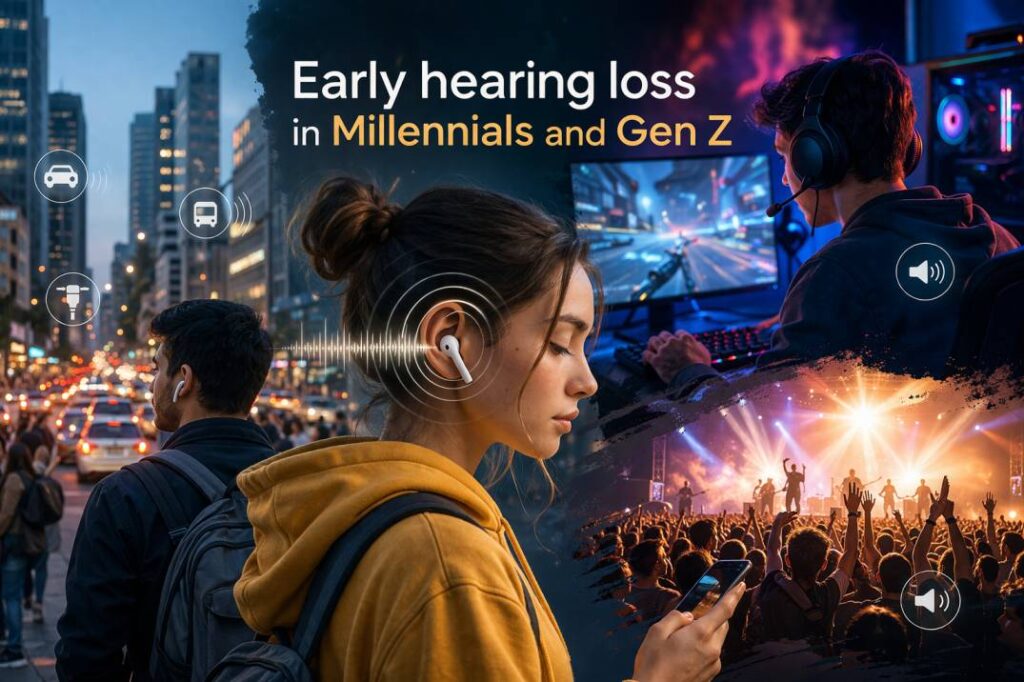
You wear earbuds almost every waking hour. You stream music while commuting, gaming, working out, and studying. You have been to concerts loud enough to make your chest vibrate. And you have never once thought about your hearing – because hearing loss is an old person’s problem.
Except it isn’t. Not anymore.
Hearing loss in millennials and Gen Z is rising faster than any generation before them at the same age. Unlike presbycusis – the gradual, age-related hearing loss most people associate with their grandparents – the hearing damage affecting younger generations today is largely preventable. It is being driven by daily habits that feel completely normal, happening silently, and leaving permanent damage long before anyone notices.
This article breaks down exactly why it is happening, what the early warning signs look like, what science says about the damage, and what you can do right now – including tools like Listening Device: Clarive that help you hear clearly while you take action.
The Numbers Behind Hearing Loss in Young Adults
Most people assume hearing problems do not show up until their 60s or 70s. The data tells a very different story.
- Around 10% of millennials already have some degree of hearing loss
- 17% of Gen Z show measurable signs of noise-induced hearing loss – nearly 1 in 5
- The CDC found that 19% of people in their 20s have hearing damage from noise exposure
- 12% of adults aged 18 to 39 report difficulty following conversations in noisy environments
- 6% of this same age group already experience tinnitus – ringing or buzzing in the ears
- The World Health Organization estimates over 1.35 billion young people globally are at risk of permanent, avoidable hearing loss
- WHO also reports 1.1 billion people aged 12 to 35 face hearing risk specifically from unsafe personal audio device use
These are not statistics about retirees. These are people in their 20s and early 30s – mid-career, raising children, still in school – dealing with a condition most assume is decades away.
Extended High-Frequency Hearing Loss: The Invisible Damage
A study at Cincinnati Children’s Hospital found that over half of 20-somethings struggled to understand speech in noisy environments. Many of them would still pass a standard hearing test. That is because the damage shows up as extended high-frequency hearing loss – damage at the upper range of human hearing that does not appear on a basic audiogram but causes very real problems in daily life.
Crowded restaurants, busy offices, and group conversations all become exhausting. The damage keeps accumulating long before it becomes clinically detectable. By the time a standard test catches it, significant harm has already been done.
What Is Causing Early Hearing Loss in Millennials and Gen Z?
This is not one problem with one cause. It is a combination of modern habits that have compounded into a generation-wide hearing crisis.
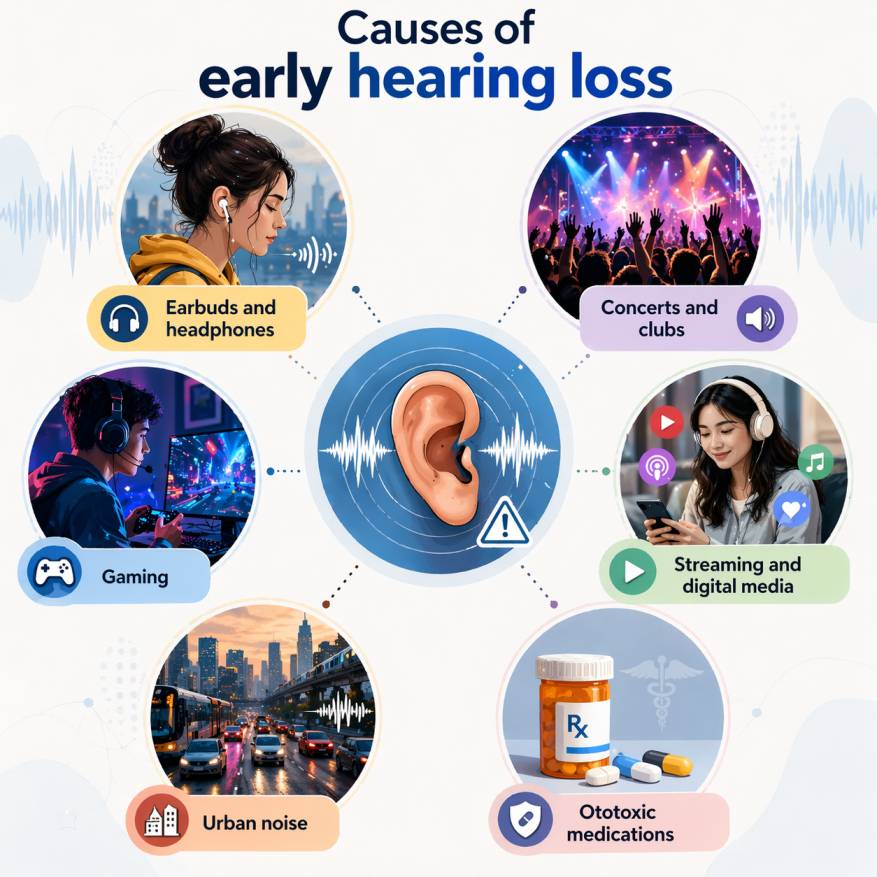
Earbuds and Headphones: The Single Biggest Risk
Unsafe listening through personal audio devices is the dominant driver of hearing loss in young adults today.
- An iPhone set to full volume reaches approximately 100 decibels
- Most headphones at maximum volume hit 110 decibels
- At 110 dB, permanent hearing damage from earbuds can begin in under two minutes
- Young adults now wear earbuds for the majority of their waking hours – commuting, studying, exercising, working, and gaming
The problem is not just volume. It is duration. Cumulative noise exposure builds silently day after day. There is no pain, no alarm, and no warning signal. The damage from unsafe headphone use is completely invisible until it is already too late to reverse.
Concerts, Clubs, and Live Events
Modern live events are louder than anything previous generations attended. Most concert venues now reach 104 to 112 decibels – high enough to cause lasting hearing damage in a single evening without ear protection. Sporting events, nightclubs, bars, firework displays, and motor sports all regularly exceed safe listening levels. For young people attending these events frequently without high-fidelity earplugs, the hearing risk accumulates significantly over time.
Gaming: An Underreported Hearing Risk
Gaming has become one of the most overlooked causes of hearing damage in young people. A 2024 Pew Research survey found that 85% of Gen Z plays video games, with nearly half playing every day. Research from BMJ Public Health found a direct link between gaming and esports habits and both hearing loss and tinnitus.
Here is why gaming specifically raises the hearing risk:
- Gamers wear headphones for hours without meaningful breaks
- In gaming centers, players turn volume up to drown out surrounding crowd noise
- Games feature sudden, extremely loud sounds – explosions, gunshots, and crowd roars – that spike well above safe levels
- Average volume levels during gaming sessions nearly exceed or fully exceed safe thresholds
All-Day Streaming and Digital Media
Millennials and Gen Z are the first generations with truly unlimited, on-demand audio. Music, podcasts, videos, and social media content – all consumed through earbuds, often for hours without interruption. Streaming platforms do not issue warnings when listening becomes dangerous. There are no natural friction points. Because content is endless, listening sessions stretch far longer than safe exposure times allow. This is how unsafe listening habits become a daily norm without anyone realizing it.
Loud Work Environments and Urban Noise
Construction, manufacturing, and hospitality work expose young workers to chronic loud noise throughout the workday. Urban environments add to this – city traffic, airports, subway systems, and airplane travel routinely produce 80 to 90 decibels of background sound. The world is simply a louder place than it was for previous generations, and the baseline daily noise exposure for younger adults reflects that.
Ototoxic Medications
Noise is not the only culprit. Certain medications – known as ototoxic medications – can cause or accelerate hearing damage independently of sound exposure. These include some antibiotics, particularly aminoglycosides, certain chemotherapy agents, high-dose aspirin, loop diuretics, and some antimalarial drugs.
If you regularly take any of these medications, it is worth having an open conversation with your doctor about hearing monitoring – especially if you are also regularly exposed to loud sound. The combination of ototoxic medication use and noise exposure dramatically raises the risk of early hearing loss in young adults.
How Noise-Induced Hearing Loss Actually Damages Your Ears
Your inner ear’s cochlea contains thousands of microscopic hair cells. These cells do one job: they convert incoming sound vibrations into electrical signals that travel to your brain. Your brain then interprets those signals as the sounds you hear, understand, and respond to.
Here is the critical fact that most people do not know: these hair cells cannot regenerate. Once they are damaged or destroyed, the hearing loss is permanent. No medication, no surgery, and no technology currently exists to restore them. This is what noise-induced hearing loss means – damage that is entirely preventable and entirely irreversible.
The Decibel Danger Zone – Exactly How Fast Damage Happens
Sound is measured in decibels. The established safe hearing threshold is 85 dB. Above that level, the cochlea begins to sustain damage – and the relationship between volume and time is not gradual. Every 3 dB increase cuts your safe exposure time in half.
- 85 dB (busy traffic): safe for up to 8 hours
- 88 dB (loud restaurant): safe for 4 hours
- 91 dB (motorcycle traffic): safe for 2 hours
- 95 dB (nightclub or loud headphones): safe for about 1 hour
- 100 dB (iPhone at full volume): safe for only 15 minutes
- 110 dB (most headphones at maximum): safe for under 2 minutes
- 112 dB (concert venue speakers): damage begins in seconds
Most young adults regularly sit in the 95 to 110 dB range during everyday listening. They do it for hours, not minutes. That gap between what is safe and what feels normal is exactly where an entire generation is losing its hearing.
Early Warning Signs You Should Not Ignore
Noise-induced hearing loss announces itself gradually and quietly. By the time most people notice, significant damage has already been done. These are the signs to act on immediately:
- Struggling to follow conversations in restaurants, offices, or group settings – this is usually the first real-world symptom
- Asking people to repeat themselves more frequently than you used to
- Turning up the TV, phone, or music to volumes others around you find too loud
- Tinnitus – ringing, buzzing, hissing, or clicking sounds in your ears, especially after loud exposure
- Feeling mentally exhausted after conversations, because your brain is working overtime to fill in missing audio
- Avoiding phone calls or group settings because voices sound muffled or unclear
- Being described as distracted or inattentive when you are actually just struggling to hear
Many young adults dismiss these symptoms as stress or poor sleep. They are frequently the first measurable signs of hearing damage. Early action consistently leads to significantly better long-term outcomes than waiting.
Why This Goes Far Beyond Your Ears
The Career Impact
Hearing loss in the workplace is uniquely challenging for younger professionals. Meetings – both in-person and virtual – become draining and stressful. Miscommunications with colleagues and clients affect performance, relationships, and opportunity. Deciding whether and when to disclose hearing loss adds a layer of pressure that most older professionals with hearing aids never had to navigate at the beginning of their careers.
The Social and Emotional Impact
Group conversations become overwhelming. Social events feel exhausting rather than enjoyable. People begin declining invitations not because they do not want to go – but because the effort of listening in noise drains them completely. Relationships suffer when a partner, friend, or family member repeatedly feels unheard or misunderstood.
Untreated hearing loss carries a measurable emotional toll: reduced self-esteem, social anxiety, frustration, chronic depression, and social isolation – all documented consistently in people with unaddressed hearing damage across all age groups.
The Cognitive Risk
Research links untreated hearing loss to accelerated brain shrinkage and significantly increased risk of cognitive decline and dementia – even in early stages. The brain expends so much energy compensating for incomplete audio signals that other cognitive functions begin to deteriorate. For people in their 20s and 30s, this is a long-term risk with genuinely serious stakes.
Young Parents with Hearing Loss
This is rarely discussed but genuinely important. Young parents managing hearing loss face added complexity – monitoring infant safety through sound cues, communicating clearly during early childhood development, and managing hearing support while keeping up with the physical demands of raising a young family. Specialized baby monitors that flash, vibrate, or include video feeds help significantly, but the daily challenge is real and underrecognized.
How to Protect Your Hearing Without Giving Up What You Love
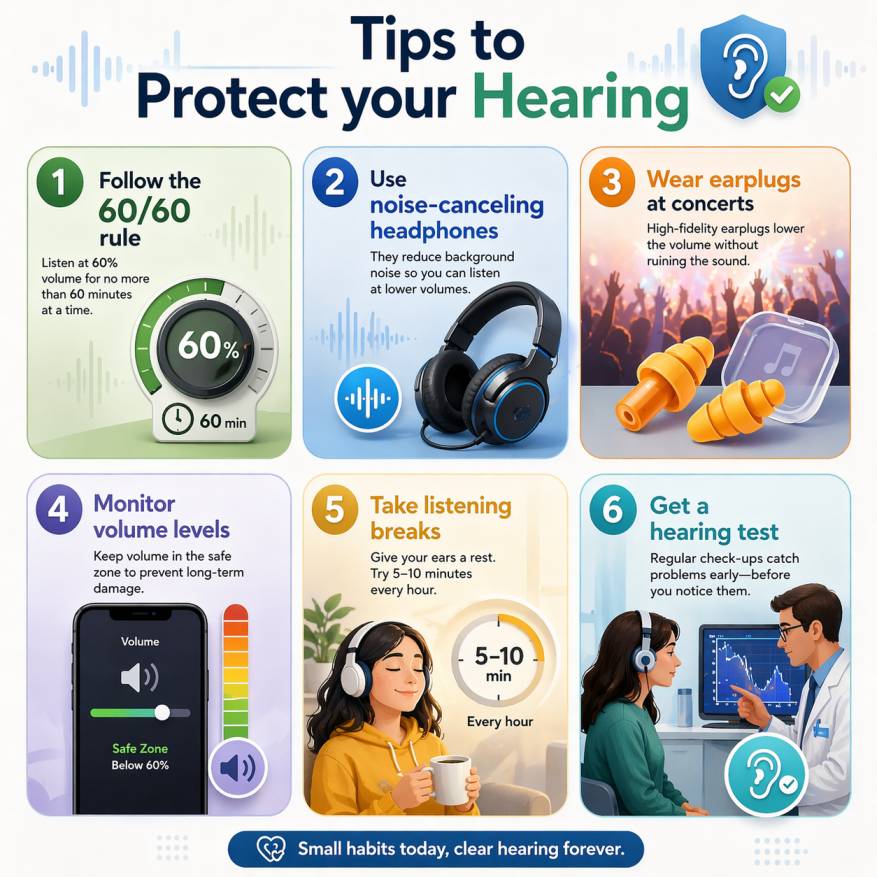
Noise-induced hearing loss is one of the most preventable health conditions there is. You do not have to give up music, gaming, or live events. You need smarter, consistent habits.
The 60/60 Rule
The most evidence-backed daily habit for safe listening: never exceed 60% of your device’s maximum volume, and never listen for more than 60 consecutive minutes without a break. This one rule, applied consistently, dramatically reduces your lifetime cumulative noise exposure without requiring major lifestyle changes.
Noise-Canceling Headphones
Noise-canceling headphones reduce background sound – which means you no longer need to raise the volume to hear your content clearly. Some models include built-in alerts when sound levels reach dangerous thresholds. Switching from standard earbuds to noise-canceling headphones is one of the most impactful changes a young adult can make for their long-term hearing health.
High-Fidelity Earplugs for Concerts and Events
High-fidelity earplugs reduce volume without distorting sound quality. They are affordable, small enough to carry on a keychain, and genuinely effective. Wearing hearing protection at concerts is increasingly normalized – musicians, celebrities, and audiologists openly advocate for it, and the cultural attitude around earplugs is shifting in younger communities.
Volume Monitoring and App Alerts
Apple Health tracks headphone audio levels and notifies users when weekly safe exposure limits are exceeded. Decibel meter apps for both iOS and Android let you check real-time sound levels in any environment. Enable volume limit warnings in your phone settings – they are typically switched off by default and most users never discover them.
Lifestyle and Nutrition for Long-Term Ear Health
A healthy lifestyle genuinely supports hearing health over the long term:
- Eat foods rich in antioxidants and folate – leafy greens, citrus fruits, and legumes all support inner ear function
- Regular cardiovascular exercise improves blood circulation throughout the body, including to the cochlea
- Magnesium and omega-3 fatty acids may offer some protective benefit – discuss with your doctor before adding supplements
- Manage stress actively – it worsens tinnitus and can accelerate existing hearing symptoms
- Stay well hydrated to support overall inner ear function
Get a Baseline Hearing Test
A hearing test is simple, painless, and takes under an hour. It gives you a baseline measurement to compare against over time. If you have a family history of hearing loss or are regularly exposed to loud noise, annual testing is strongly recommended. Smartphone-based hearing screens are a useful quick check – but they do not replace a full professional evaluation by a trained audiologist.
Modern Hearing Aids for Millennials and Gen Z
There is a strong stigma around hearing aids in younger generations – and it is based on a completely outdated image. Modern hearing aids bear no resemblance to the large, obvious devices of previous decades. Today’s hearing aids designed for young people are:
- Sleek, small, and virtually invisible – designed to sit discreetly inside or behind the ear
- Bluetooth-enabled, streaming directly from your smartphone and functioning like premium wireless earbuds
- Controlled entirely via smartphone apps – adjust volume, settings, and environment profiles from your phone
- Rechargeable with all-day battery life – no fiddling with small disposable batteries
- Equipped with tinnitus management features and intelligent environmental noise filtering
- Available with classroom streaming accessories that pipe a teacher’s or professor’s voice directly to the hearing device
If you are in your 20s or 30s and have been told you have hearing loss, modern hearing aids deserve a serious conversation with an audiologist. They are engineered for active, tech-forward lifestyles – not retirement.
How Listening Device: Clarive Supports You Right Now
If you are already noticing difficulty – following conversations in noisy environments, missing words on calls, feeling like you constantly ask people to repeat themselves – you do not need to wait for a clinical appointment or an insurance approval to get meaningful support.
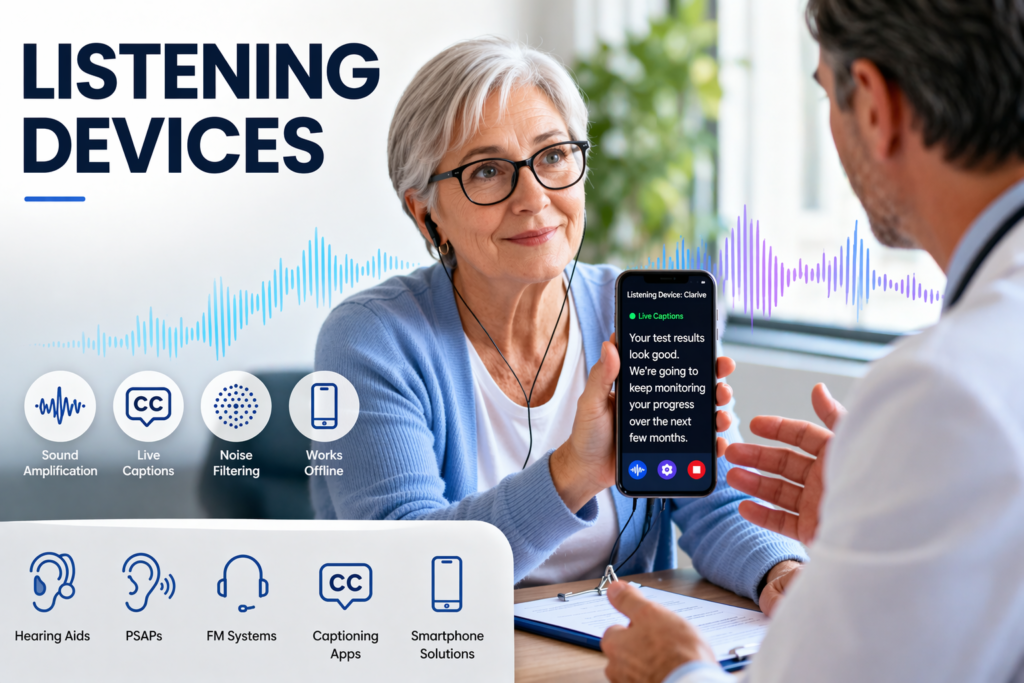
Listening Device: Clarive turns your smartphone into a real-time hearing assistant. It was built specifically for people who need accessible, practical hearing support without complicated hardware, accounts, or setup.
What Clarive Does
- Real-time sound amplification – amplifies voices and environmental sounds around you instantly through any earphones you already own
- Live Caption – transcribes speech to on-screen text in real time so you never miss what is being said, even in fast conversation
- Voice amplifier controls – adjust amplification levels to match your specific environment, from a quiet one-on-one conversation to a noisy crowded room
- Works with any wired or wireless earphones – no special or expensive hardware required
- No internet connection, no account creation, no complex setup – open the app and it works immediately
Real-Life Situations Where Clarive Helps
Sitting in a loud restaurant trying to follow a conversation across the table. Being in a lecture hall where the professor speaks too quietly. On a video call where audio quality drops unpredictably. These are the exact moments where Clarive steps in – discreetly, immediately, and practically. It gives you real-time hearing support wherever you are, without drawing attention to itself.
Pricing and Free Access
Both the Hearing Aid and Live Caption features are completely free for up to 5 uses per day – no commitment or credit card required. For unlimited daily use, Pro plans are available:
- Monthly plan: $5.99 per month with a 3-day free trial
- Yearly plan: $24.99 per year – currently 50% off the standard price – with a 7-day free trial included
Clarive is not a substitute for professional hearing care. But it is a meaningful, immediate first step that gives you real-time support while you figure out your longer-term plan.
Conclusion: Protect What You Cannot Get Back
Hearing loss in millennials and Gen Z is not a future problem. It is happening right now, to people in their 20s and 30s, driven by habits that feel completely ordinary – earbuds, streaming, gaming, concerts, and everyday urban noise.
Biology is unforgiving. Once the hair cells inside your cochlea are gone, they do not come back. There are no treatments that restore them. Presbycusis from aging comes for everyone eventually – but the noise-induced hearing loss that is silently affecting millions of young adults right now is almost entirely preventable.
Small, consistent changes to how you listen make a meaningful difference over a lifetime. And if you are already experiencing symptoms, early action – whether that is a hearing test, smarter listening habits, a conversation with an audiologist about modern hearing aids, or using a tool like Clarive today – always leads to better outcomes than waiting.
Your hearing connects you to every conversation, every relationship, and every moment that matters. Treat it like the irreplaceable thing it is.
Your action plan starting today:
- Apply the 60/60 rule – 60% volume, 60 minutes maximum, every day
- Enable volume alerts on your phone and all streaming apps right now
- Buy high-fidelity earplugs and bring them to your next concert or event
- Schedule a baseline hearing test – simple, painless, and takes under an hour
- If you are already struggling in noisy environments, download Listening Device: Clarive for immediate real-time hearing support with no setup required
Frequently Asked Questions
Why are millennials getting hearing loss so early?
Millennials grew up with personal audio devices, streaming, and louder entertainment. Daily unsafe listening habits combined with frequent concert and gaming exposure have accelerated hearing damage well before middle age in this generation.
What percentage of Gen Z has hearing loss?
Research shows approximately 17% of Gen Z already show signs of noise-induced hearing loss – nearly 1 in 5 young adults – a significantly higher rate than previous generations experienced at the same age.
Can earbuds permanently damage your hearing?
Yes. Earbuds at maximum volume reach 100 to 110 dB, causing permanent cochlea hair cell damage in minutes. Since these cells never regenerate, earbud-related hearing loss is irreversible with no current medical treatment available.
What are the early signs of hearing loss in young adults?
The most common early signs include struggling to hear in noisy environments, frequently asking people to repeat themselves, turning up device volume, ringing in the ears (tinnitus), and feeling mentally drained after conversations.
What is noise-induced hearing loss?
Noise-induced hearing loss is permanent hearing damage caused by prolonged or sudden exposure to sounds above 85 dB. It destroys cochlea hair cells that cannot regenerate, making prevention the only truly effective response available.
What is the 60/60 rule for hearing protection?
The 60/60 rule means listening at no more than 60% of maximum volume for no longer than 60 consecutive minutes at a time. This single daily habit dramatically reduces cumulative noise exposure and long-term hearing damage risk.
Can ototoxic medications cause hearing loss?
Yes. Certain antibiotics, chemotherapy drugs, high-dose aspirin, and loop diuretics are ototoxic medications that can damage hearing. Combined with regular noise exposure, the risk increases significantly – worth discussing with your doctor if applicable.
What are modern hearing aids like for young people?
Today’s hearing aids for millennials and Gen Z are sleek, nearly invisible, and Bluetooth-enabled. They stream directly from smartphones, are adjusted via apps, and are built for active lifestyles – completely different from the outdated image most people carry.
Can an app really help with hearing loss?
Yes. Apps like Listening Device: Clarive amplify real-time sound, provide live captions, and offer voice amplifier controls – giving immediate, practical hearing support without hardware, internet connection, or any account setup required.
Is gaming bad for your hearing?
Yes. Most gamers use headphones for hours at high volumes. Games feature sudden loud sounds, and gaming center noise pushes volume even higher. BMJ Public Health research directly links gaming and esports habits to hearing loss and tinnitus in young adults.