You walked out of a loud concert and your ears were ringing.
You told yourself it would stop by morning.
It did – that time.
But here’s what most people don’t know: every time you’re around very loud sounds without ear protection, you’re slowly damaging something inside your ears that can never be fixed.
Noise-induced hearing loss (NIHL) can happen fast – or it can creep up on you slowly over many years. It can affect one ear or both. And most people don’t even notice it’s happening until it’s too late.
The good news? Unlike other types of hearing loss, NIHL is completely preventable.
This guide will show you exactly what causes hearing damage, how to spot it early, and what you can do to protect your ears – starting today.
What Is Noise-Induced Hearing Loss?
Think of your ears like a garden.
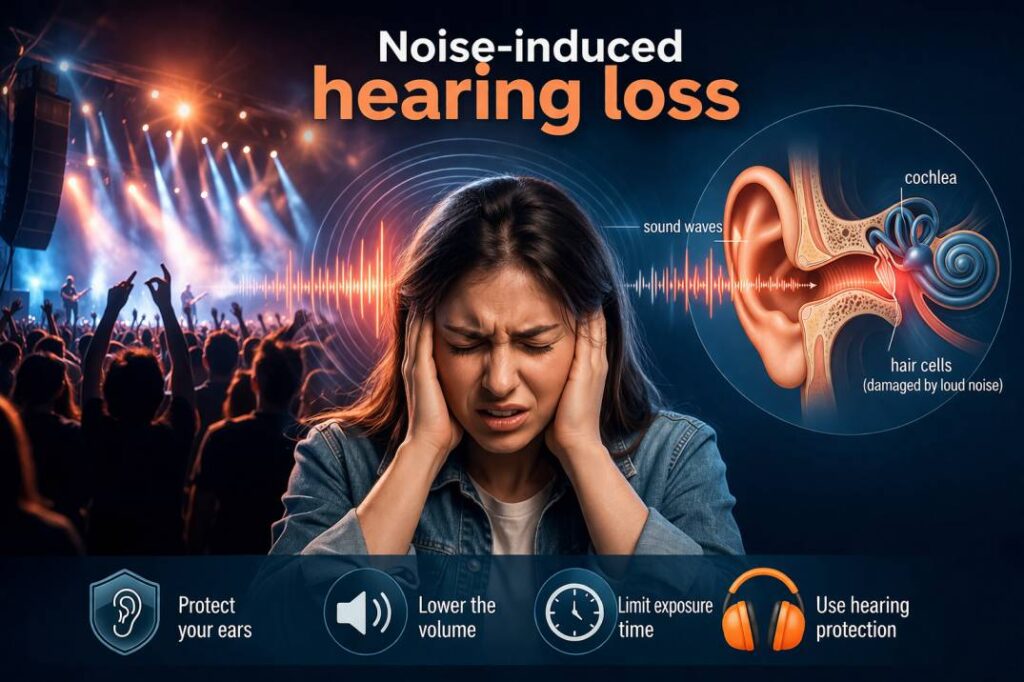
Inside your inner ear, there are tiny little hair cells – thousands of them. Their only job is to pick up sounds and send messages to your brain so you can hear.
These hair cells convert sounds into electrical signals that travel to the brain. Once damaged, they cannot grow back – which means the hearing loss they cause is permanent.
When sounds get too loud, it’s like a storm ripping through that garden. The hair cells get flattened, broken, and destroyed. And unlike a real garden – they don’t grow back. Ever.
Sounds can be harmful when they are too loud even for a brief time, or when they are both loud and long-lasting. These sounds damage sensitive structures in the inner ear and cause noise-induced hearing loss.
Who Gets Noise-Induced Hearing Loss?
You might think this only happens to older people or construction workers.
It doesn’t.
NIHL affects 5.2 million children and teens between the ages of 6 and 19, and 26 million adults between the ages of 20 and 69.
Approximately 40 million American adults may have hearing loss from noise exposure.
That’s more people than the entire population of many countries.
Hearing damage from loud noise can come from everyday things – things most people do without a second thought:
- Listening to music through earbuds at full volume
- Mowing the lawn every Saturday
- Going to loud concerts or sports games
- Working near loud machines every day
Jobs with the highest risk of occupational hearing loss include agriculture, carpentry, construction, military service, mining, and oil or gas extraction.
But you don’t have to work in any of these places to be at risk. Noise-induced hearing damage is sneaky – it builds up slowly, a little bit at a time.
What Decibel Level Causes Hearing Damage?
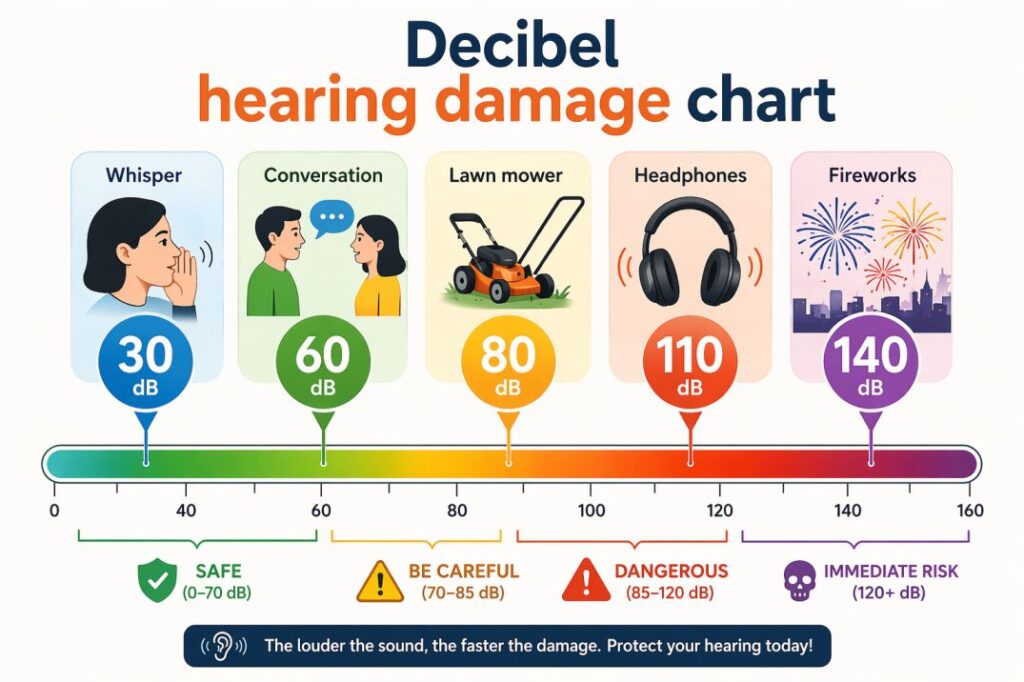
Sound is measured in units called decibels (dB). The bigger the number, the louder the sound – and the more dangerous it is.
Sounds at or below 70 decibels, even after long exposure, are unlikely to cause hearing loss. But long or repeated exposure to sounds at or above 85 decibels can cause hearing loss. The louder the sound, the shorter the time it takes for damage to happen.
Here’s a simple way to think about it:
Decibel Hearing Damage Chart
| Sound | Decibel Level | Is It Safe? |
| Whispering | 30 dB | Totally safe |
| Normal conversation | 60–70 dB | Safe |
| Washing machine | 70 dB | Safe |
| Lawnmower | 80 dB | Be careful |
| Motorcycle | 95 dB | Dangerous |
| Headphones at max volume | 110 dB | Very dangerous |
| Emergency siren nearby | 120 dB | Hurts immediately |
| Gunshot / Fireworks | 140–160 dB | Can cause instant damage |
A single loud sound at or above 120 decibels can cause immediate hearing loss.
Music through headphones at maximum volume, sporting events, and concerts can reach 94–110 decibels.
The simple rule to remember: Too loud + Too long + Too close = Hearing damage.
How Does Loud Noise Actually Damage Your Ears?
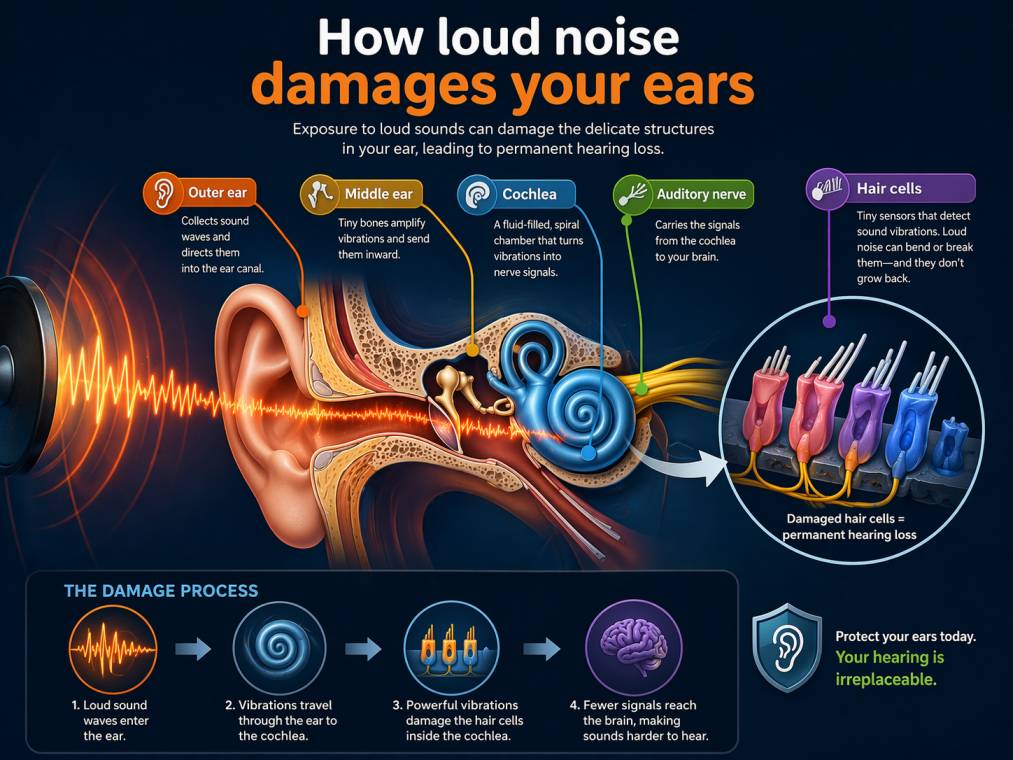
Let’s walk through what happens inside your ear when a loud sound hits.
Sound waves enter the outer ear and travel through the ear canal to the eardrum. The eardrum vibrates and passes those vibrations to three tiny bones in the middle ear – the malleus, incus, and stapes.
Those bones send vibrations into the fluid-filled cochlea in the inner ear. Tiny hair cells sitting inside the cochlea ride these waves. As they move, they open tiny channels that create electrical signals, which the auditory nerve sends to the brain – and that’s how you hear sound.
Now imagine blasting all of that with a sound that’s way too loud. The wave is so powerful that the hair cells get beaten down – like blades of grass in a hurricane.
Most noise-induced hearing loss is caused by the damage and eventual death of these hair cells. Unlike some animals, human hair cells don’t grow back. They are gone for good.
There are two ways this damage happens:
- Acoustic trauma – instant hearing loss from a single extremely loud sound like a gunshot or explosion. This can be immediate and permanent.
- Chronic NIHL – slow damage from repeated exposure to loud sounds over time, like daily headphone use at high volume. You may not notice it for weeks, months, or even years.
Is Noise-Induced Hearing Loss Permanent or Temporary?
Here’s where it gets tricky.
After a loud concert, your hearing might feel muffled or your ears might ring. Then the next morning – it’s back to normal. So you think everything is fine.
But it might not be.
Sometimes loud noise causes a temporary hearing loss that disappears 16 to 48 hours later. But recent research suggests that even though the hearing loss seems to go away, there may be lasting long-term damage that you can’t feel yet.
Think of it like a sunburn on your skin. The redness fades – but the damage underneath has already happened. Do it enough times, and the effects become permanent.
While healthcare providers can’t cure NIHL, there are treatments that can help improve your hearing – like hearing aids or, in serious cases, cochlear implants.
The message is clear: don’t treat temporary hearing loss as a sign that everything is fine. Treat it as a warning.
Symptoms of Ear Damage from Loud Noise
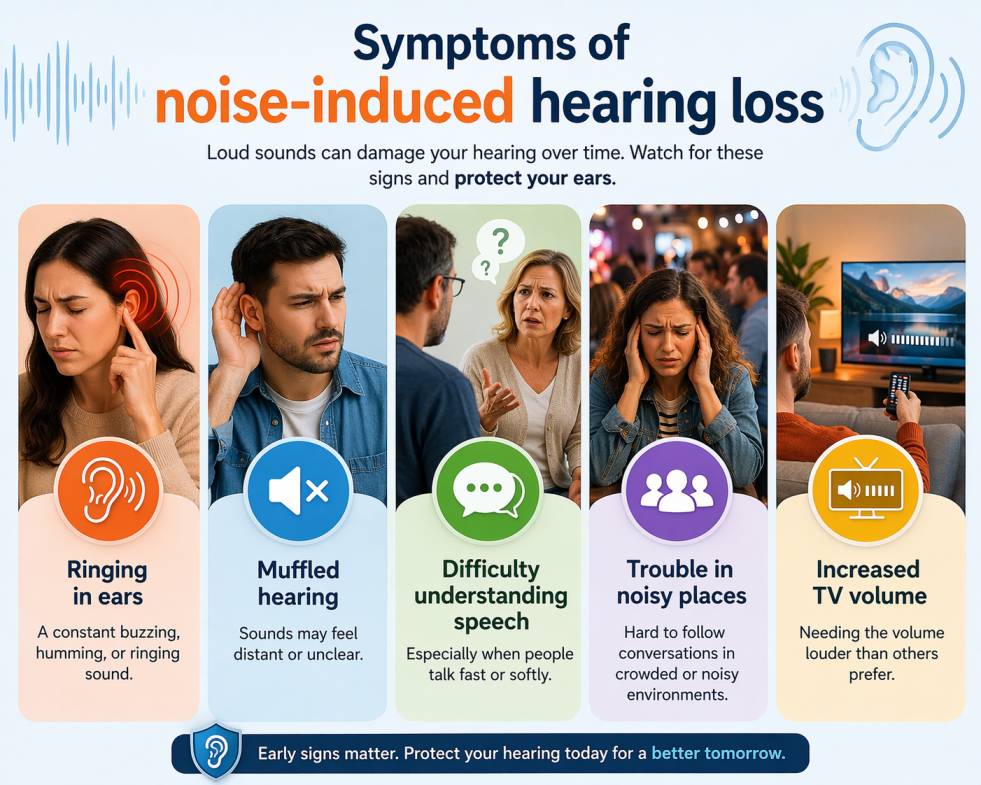
The tricky thing about noise-induced hearing damage is that it often doesn’t hurt. It sneaks up quietly.
Here are the most important warning signs to watch for:
Common symptoms of NIHL include a feeling of fullness or pressure in your ear, the inability to hear high-pitched sounds like birds singing, and muffled or distorted speech.
Other signs of hearing damage include:
- Ears ringing or buzzing after loud music – this is called tinnitus
- Struggling to hear clearly in noisy places like restaurants or classrooms
- Needing to turn the TV up louder than you used to
- Having a hard time understanding people on the phone
- Sounds feeling distant or muffled after a loud event
Sound is dangerous if you have to shout over background noise to be heard, the noise is painful to your ears, it makes your ears ring, or you have muffled hearing for several hours after the exposure.
And it’s not just your hearing that suffers. NIHL can also lead to anxiety, depression, fatigue, high blood pressure, insomnia, and irritability.
Hearing loss touches every part of your life – your relationships, your work, your mood, and your confidence.
How to Prevent Hearing Damage
Here’s the most important thing in this entire article:
Noise-induced hearing loss is the only type of hearing loss that is completely preventable.
You have real control over this. Here’s how to use it:
Wear ear protection. There are different types of hearing protection – foam earplugs, earmuffs, and custom hearing protection devices. Audiologists can make custom protection for musicians, hunters, and workers in loud industries.
Turn the volume down. Turn down the volume when listening to the radio, TV, music players, or anything through earbuds or headphones. A good habit: if someone next to you can hear your music through your earbuds, it’s already too loud.
Step away from the noise. If you can’t protect your ears, move far away from the loud noise source. Distance makes a huge difference. Even a few extra feet between you and a loud speaker reduces the sound hitting your ears significantly.
Protect your kids. Help young children protect their ears until they are old enough to do it themselves. Children’s ears are just as vulnerable – and they’re often exposed to loud sounds at concerts, fireworks shows, and sports events.
Get your hearing checked. Tell your healthcare provider if you have a history of noise exposure, develop tinnitus after a loud sound, notice any changes in your hearing, or experience sudden or quickly worsening hearing loss. Catching it early makes a real difference.
Living With Hearing Loss: You Don’t Have to Struggle Alone
For many people reading this, the damage has already started.
Maybe you’ve noticed you keep asking people to repeat themselves. Maybe conversations in noisy restaurants feel exhausting. Maybe you leave family gatherings feeling tired and disconnected – not because you didn’t want to be there, but because following along was just too hard.
That experience is more common than most people admit. And it’s not your fault.
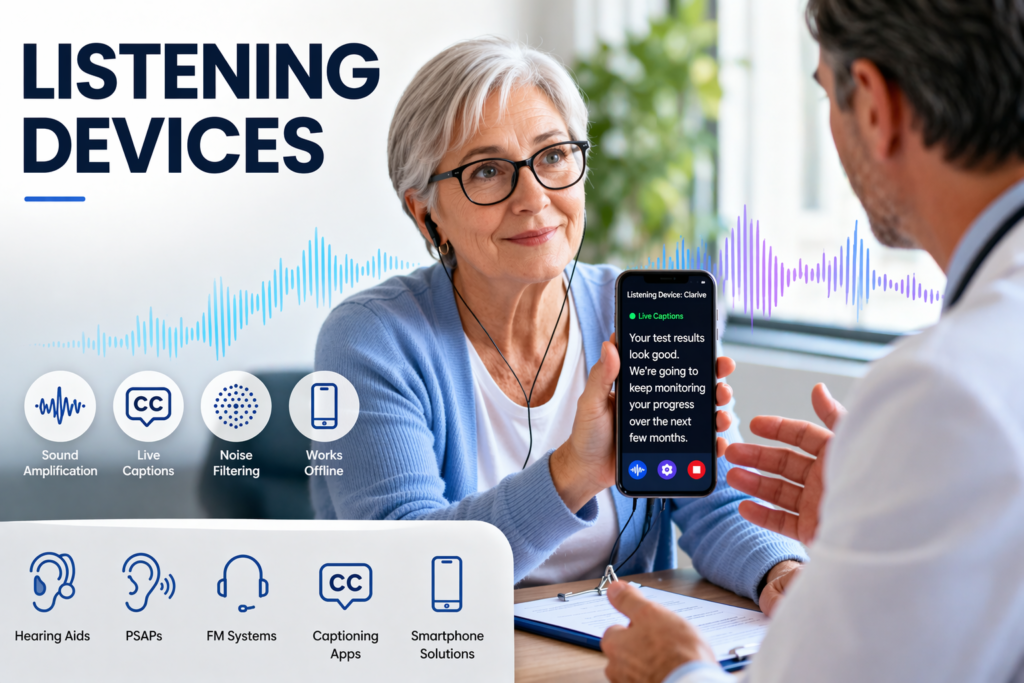
This is exactly the problem that Listening Device: Clarive was built to solve.
Picture this: you’re at a family dinner. The room is noisy. Your grandmother is telling a story across the table. You’re straining to hear – and catching maybe half the words.
With Clarive, you just plug in your earphones, open the app, and instantly the voices around you become clearer, louder, and easier to follow. Background noise gets filtered out. If you still miss something, the live captions show the words in real time right on your screen.
No internet. No account. No complicated setup.
Clarive works for anyone who needs a little extra hearing support – whether you’re hard of hearing, managing age-related or noise-induced hearing loss, or simply in a loud environment where hearing clearly matters.
Both the Hearing Aid and Live Caption features are free to use up to 5 times per day. For full unlimited access, Pro plans start at just $24.99/year – currently 50% off.
You deserve to hear every conversation, every story, every moment.
Conclusion: Protect What You Can’t Replace
Your hearing is one of those things you don’t appreciate until it starts to fade.
The loud music, the power tools, the earbuds cranked to max – none of it feels dangerous in the moment. But the damage adds up silently, invisibly, and permanently.
Here’s what to take away from everything you just read:
- 85 dB and above can damage your hearing – even sounds you encounter every day
- Hair cells in your ears never grow back – so prevention is everything
- Temporary muffled hearing after loud noise is your body sending you a warning
- Earplugs, lower volume, and distance are the three simplest ways to protect yourself
- If you already live with hearing challenges, tools like Clarive can help you stay connected and hear clearly in real life
Don’t wait until the damage becomes permanent. Protect your hearing now – and if you’re already dealing with hearing loss, know that real, practical help is available.
👉 Download Listening Device: Clarive today and start hearing the world more clearly – for free.
Frequently Asked Questions
What is noise-induced hearing loss (NIHL)?
NIHL is hearing damage caused by loud sounds that destroy the tiny hair cells inside your inner ear. These cells can never grow back, which is why the hearing loss they cause is often permanent and irreversible.
What decibel level causes hearing damage?
Sounds at or above 85 decibels can damage your hearing over time. A single sound above 120 decibels – like a nearby gunshot – can cause instant and permanent hearing loss with just one exposure.
Is noise-induced hearing loss permanent or temporary?
It can be both. Temporary hearing loss may recover within 48 hours, but each episode causes hidden damage. Repeated temporary hearing loss eventually leads to permanent, irreversible hearing damage over time.
What are the symptoms of ear damage from loud noise?
Key symptoms include muffled hearing, ringing in the ears (tinnitus), difficulty hearing in noisy places, ear pressure or fullness, and trouble understanding speech – especially when background noise is present around you.
How many decibels can cause hearing damage?
Repeated exposure to 85 dB and above causes gradual damage. At 110 dB – like headphones at full volume – damage happens in minutes. At 140 dB, such as fireworks, injury can be nearly instant.
Can hearing loss from loud noise be reversed?
Currently, there is no cure for NIHL. Hearing aids and cochlear implants can help manage it. The only truly effective strategy is preventing further damage through consistent hearing protection and safer listening habits.
How can noise-induced hearing loss be prevented?
Wear earplugs or earmuffs around loud sounds, keep headphone volume below 60%, step away from loud noise sources, and get regular hearing checks – especially if you work or spend time in consistently loud environments.
Does loud music cause hearing loss?
Yes. Music at maximum volume through earbuds exposes your ears to 94–110 dB – well above the safe 85 dB limit. Regular exposure without breaks is one of the most common causes of hearing damage in young people today.
How long does noise-induced hearing loss last?
Temporary hearing loss may improve within 16–48 hours after noise exposure. However, repeated episodes lead to permanent cumulative damage. If symptoms like muffled hearing or ringing last beyond two days, see a doctor immediately.
What is tinnitus and how does it relate to noise-induced hearing loss?
Tinnitus is a ringing, buzzing, or roaring sound in the ears caused by noise damage to hair cells. It often appears alongside NIHL and can be temporary or lifelong – and is usually one of the very first warning signs.