You stopped going to family dinners. Not because you don’t want to be there – but because following three conversations at once in a noisy room leaves you exhausted, embarrassed, and more alone than before you arrived.
That feeling has a name. And it is far more common than most people realize.
Hearing loss does not just affect what you hear. It quietly reshapes how you feel, how you connect, and over time, how you see yourself. Research confirms what millions of people with hearing loss already know: the mental health impact is real, serious, and deeply underestimated.
In this article, you will learn exactly how hearing loss affects mental health, why emotional damage often goes untreated for years, and what practical steps – including tools available right now – can help you reclaim your confidence and connection.
It’s More Than Just Not Hearing Well
Most people think of hearing loss as a physical problem. You simply cannot hear certain frequencies. You ask people to repeat themselves. You turn up the TV.
But hearing loss is, at its core, a communication disability. And communication is not just how we exchange information – it is how we build relationships, feel valued, and participate in life.
When Communication Becomes Exhausting
Every conversation becomes a mental workout when you have hearing loss. You are constantly filling in gaps, reading lips, guessing context, and compensating. By the end of a simple dinner with friends, you are not just tired – you are drained.
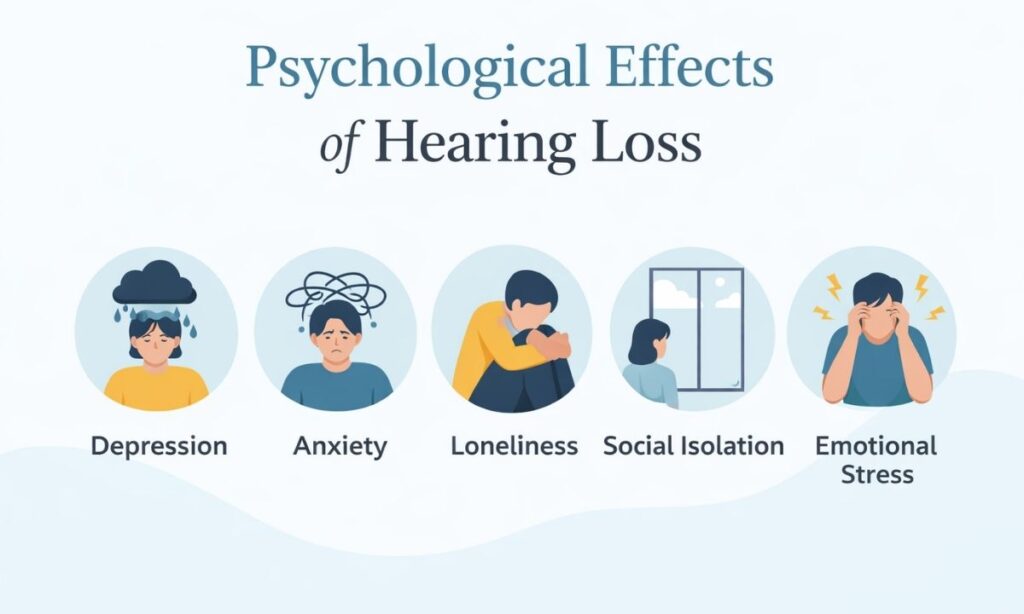
This mental exhaustion is called cognitive load, and it builds up fast. When communication consistently costs more energy than it returns in connection, the natural response is to stop trying. That is where the real danger begins.
The Real Psychological Effects of Hearing Loss
Depression and Hearing Loss – The Numbers Don’t Lie
The link between depression and hearing loss is not anecdotal. It is backed by consistent research across multiple institutions.
- Adults with untreated hearing loss are 47% more likely to experience symptoms of depression compared to those with normal hearing
- Hearing loss is strongly associated with the development of depression in older adults
- Regular hearing aid use has been linked to a lower prevalence of depression
- Some studies show measurable reductions in depressive symptoms within just three months of using hearing aids
- A 2020 JAMA study confirmed that hearing aids reduced the risk of psychological distress linked to hearing loss
Despite this, fewer than 25% of adults with significant hearing loss use hearing aids. And on average, people wait seven years from noticing their hearing loss before seeking any treatment. Seven years of silent suffering.
Anxiety, Shame, and the Fear of Social Situations
Beyond depression, hearing loss creates a distinct pattern of anxiety and shame that is rarely discussed openly.
People with hearing loss often feel:
- Embarrassed when they mishear and respond incorrectly in conversations
- Anxious about phone calls, meetings, restaurants, and any situation where background noise makes hearing harder
- Paranoid – sometimes even believing others are talking about or laughing at them
- Guilty about constantly asking others to repeat themselves
This is not a weakness. This is the predictable emotional response to a daily communication barrier that society rarely accommodates.
The frustration of straining to hear in noisy environments, combined with the stigma surrounding hearing aids and assistive technology, creates an emotional burden that is both invisible and exhausting.
Cognitive Decline – What Happens to Your Brain
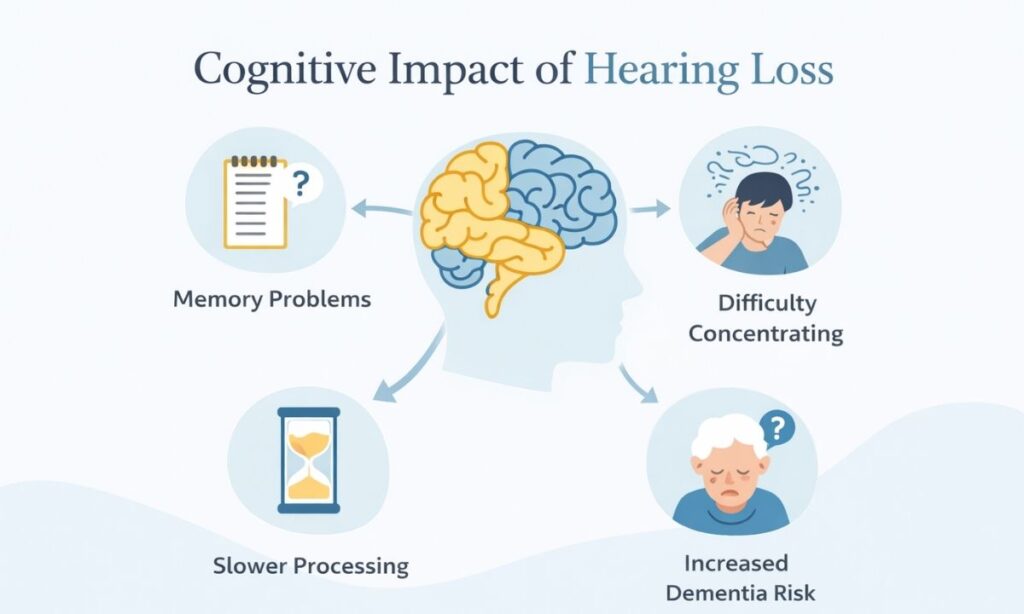
Here is something most articles skip over: hearing loss affects your brain, not just your ears.
When your auditory system is not getting proper input, the part of your brain responsible for processing sound begins to atrophy – it literally deteriorates from lack of use. This contributes to:
- Difficulty concentrating
- Memory problems
- Slower cognitive processing
- Increased risk of dementia in older adults
Additionally, because hearing loss can affect balance, many people start avoiding physical activity. Less movement means fewer endorphins, more sedentary time, and a significantly higher risk of depression. It is a chain reaction that starts with the ears and works its way through the entire body and mind.
The Isolation Cycle Nobody Warns You About
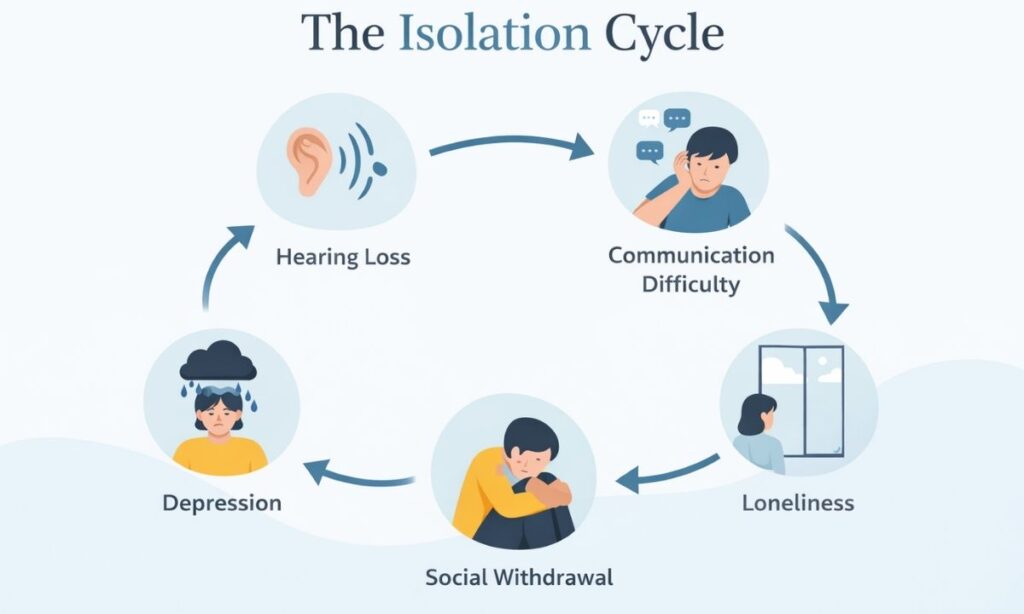
How Withdrawal Becomes a Habit
It starts small. You skip one noisy birthday party. Then a church service. Then a team lunch at work. Each time, it feels like the easier choice – and each time, the habit of withdrawal grows stronger.
Researchers have consistently found that adults with hearing loss are less likely to participate in organized social activities. And the consequences of that withdrawal are serious:
- Chronic loneliness
- Weakened relationships with family and friends
- A shrinking sense of identity and purpose
- Significantly higher rates of depression and psychological distress
Perceived social disability – the feeling that hearing loss is cutting you off from normal life – has been proven to act as a direct bridge between hearing impairment and psychological distress. It is not just the hearing loss itself. It is what the hearing loss takes away from you socially.
The Grief No One Talks About
Losing the ability to hear clearly is a genuine loss – and like any loss, it often comes with a grieving process.
That grief can look like:
- Anger at the unfairness of it
- Resentment toward people who hear easily
- Sadness about the things you are missing
- Depression as the loss feels permanent
- Eventually, for many – acceptance
Mental health professionals who work with hearing loss often note that this grief is frequently unrecognized and untreated because neither the patient nor their doctor thinks to connect the emotional symptoms to the hearing condition.
Who Is Most at Risk?
Older Adults and the Mental Health Burden
According to the National Institute on Aging, approximately one in three people between the ages of 65 and 74 experience hearing loss. By age 75 and older, that number climbs sharply.
For older adults, the compounding effect is significant. Hearing loss adds to existing physical health challenges, reduces social engagement at a life stage where community is already harder to maintain, and accelerates cognitive decline. Hearing loss and depression in older adults are so closely linked that researchers now consider untreated hearing loss a significant risk factor for poor mental health outcomes in aging populations.
Gender Differences in Psychological Distress
This is a nuance competitors rarely address. Research involving 200 older adults with hearing impairment found that men reported significantly higher levels of psychological distress than women (p<0.05).
One likely reason: men who rely on their ability to communicate and perform at work or as family providers feel the impact of hearing loss more acutely on their sense of identity and competence. The disability does not just affect hearing – it challenges their role.
How to Break the Cycle – Practical Steps That Actually Help
Seek Help Early – Don’t Wait 7 Years
The single most important thing you can do is act early. Early diagnosis and rehabilitation of hearing loss consistently improve quality of life outcomes. Treatment options include:
- Hearing aids (now available over the counter)
- Cochlear implants for severe cases
- Auditory training
- Assistive listening devices
- Mental health counseling from therapists experienced with hearing loss
Seeing a doctor does not mean admitting defeat. It means reclaiming your quality of life before the emotional and cognitive toll compounds further.
Use Technology to Stay Connected Right Now
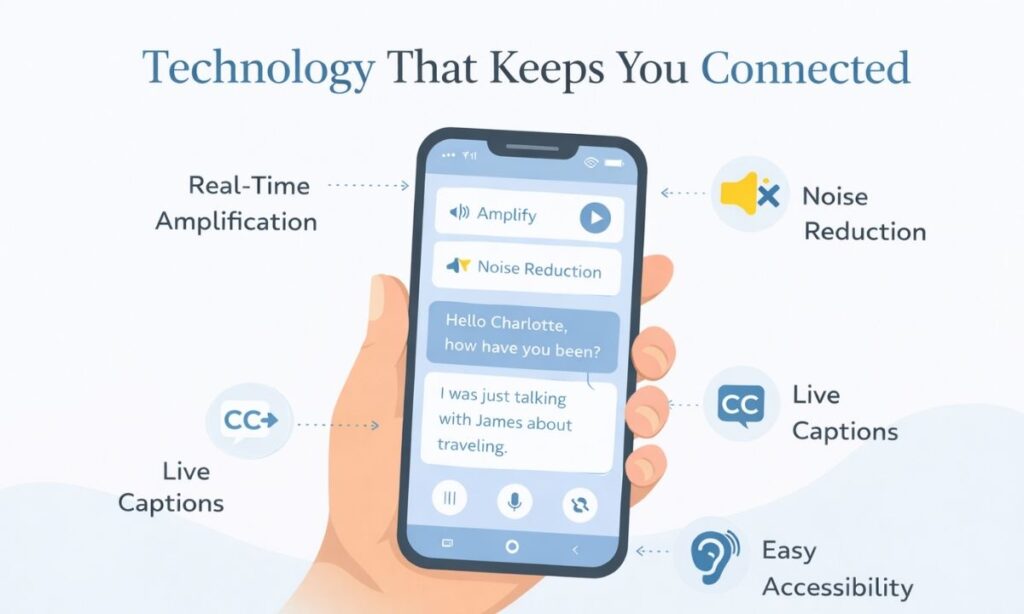
While formal treatment is important, the emotional impact of hearing loss happens in real time – at the dinner table, in the classroom, during a conversation with a grandchild. You need support at the moment, not just in a clinic.
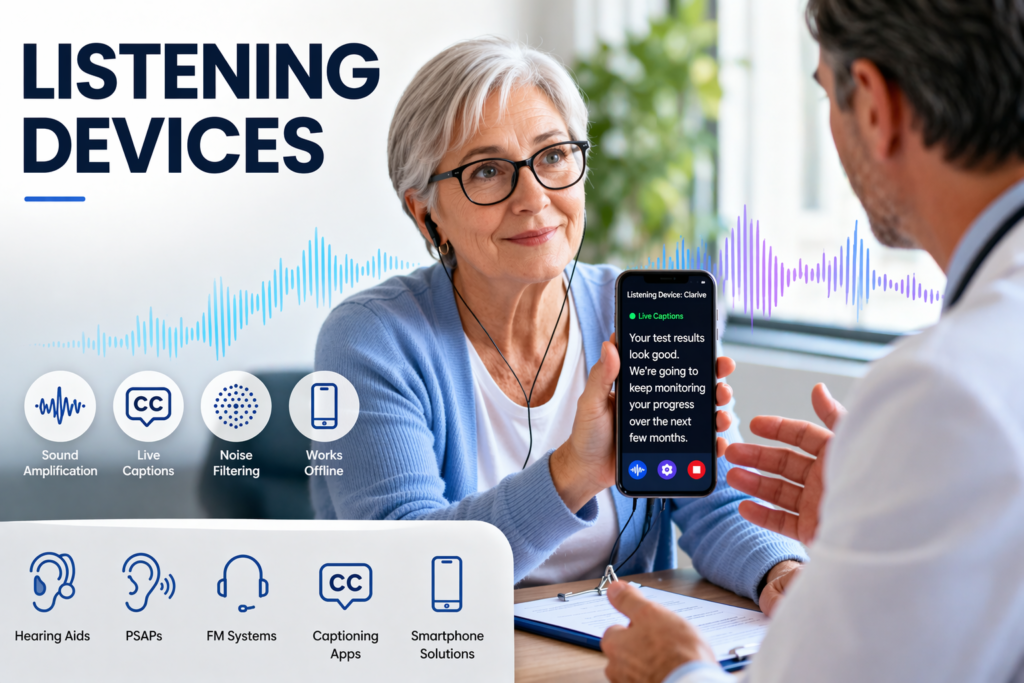
This is where tools like Listening Device: Clarive make a real difference. Clarive turns your smartphone into a smart hearing assistant – no internet required, no complicated setup, no account needed.
Just plug in your earphones, open the app, and instantly:
- Amplify voices around you in real time
- Filter out background noise so you can focus on what matters
- Read live captions on screen so you never miss a word – even in crowded, noisy environments
For anyone managing hearing loss in daily life, Clarive offers immediate, discreet support wherever you are – whether you are in a family dinner, a classroom, a workplace meeting, or simply having a quiet conversation at home.
You can use both the hearing aid amplification and live caption features up to five times per day completely free. If you need unlimited daily access, Pro plans start at just $5.99/month with a free trial.
The emotional relief of actually following a conversation – without exhaustion, without shame – is not a small thing. It is the difference between isolation and connection.
Build Your Support System
Technology helps in the moment, but human connection is what heals over time. Research is clear: social support is one of the most powerful protective factors against depression and psychological distress in people with hearing loss.
Practical ways to build that support:
- Join a hearing loss support group (the Hearing Loss Association of America has chapters nationwide)
- Tell the people close to you what you need – communication strategies that actually work
- Consider therapy with a counselor experienced in disability and chronic health conditions
- If you are in crisis, the 988 Suicide & Crisis Lifeline is available 24/7 by call, text, or chat
You do not have to navigate this alone. And you do not have to wait until things get worse before reaching out.
Together, they address the two most significant communication challenges faced daily by deaf and hard-of-hearing individuals. For additional solutions, explore our comprehensive guide.
| Signs of Hearing Loss You Might Be Ignoring | Click |
| What Is Mild Hearing Loss? Levels, Signs | Click |
| Listening Devices: What They Are, How They Work | Click |
| The Complete Guide to Hearing Loss: Types, Causes, & Solutions | Click |
| Noise-Induced Hearing Loss: Causes, Symptoms, Prevention | Click |
| Why Millennials and Gen Z Are Experiencing Hearing Loss Earlier | Click |
| The Hidden Cost of Untreated Hearing Loss | Click |
Conclusion
Hearing loss is not just an ear problem. It is a mental health challenge that affects millions of people who often suffer in silence for years – sometimes for decades – before getting support.
The depression, anxiety, shame, social withdrawal, cognitive decline, and grief that come with hearing loss are real. They are documented. And they are treatable.
Key takeaways:
- Adults with untreated hearing loss are nearly 50% more likely to experience depression
- The emotional impact starts with communication exhaustion and builds into full isolation if untreated
- Hearing aids, counseling, and community support all reduce psychological distress significantly
- You do not have to wait for a clinic appointment to get relief – tools like Clarive give you real-time amplification and live captions right from your phone, today
The first step is the hardest: acknowledging that what you are feeling is connected to what you are hearing. Once you make that connection, the path forward becomes much clearer.
FAQs
Can hearing loss really cause depression?
Yes. Research shows adults with untreated hearing loss are 47% more likely to experience depression symptoms. The communication barriers and social isolation that come with hearing loss directly contribute to depressive episodes over time.
What are the psychological effects of hearing loss?
Common effects include depression, anxiety, shame, paranoia, social withdrawal, cognitive decline, and grief. These develop gradually as communication barriers reduce social engagement and increase emotional exhaustion in daily life.
How does hearing loss lead to social isolation?
When conversations become exhausting, people with hearing loss begin avoiding social situations – parties, dinners, gatherings. Over time, this withdrawal becomes habitual, leading to chronic loneliness and worsening mental health outcomes.
Does hearing loss affect the brain?
Yes. When auditory processing is reduced, the brain’s hearing centers can atrophy. This leads to cognitive decline, difficulty concentrating, and memory problems, increasing the long-term risk of dementia in older adults.
Who is most at risk for depression from hearing loss?
Older adults are at highest risk, with one in three people aged 65–74 experiencing hearing loss. Research also shows men tend to report higher psychological distress from hearing loss than women.
How long do people typically wait before treating hearing loss?
On average, people wait seven years from first noticing hearing loss before seeking treatment. This delay allows psychological distress, social isolation, and cognitive decline to worsen significantly in the meantime.
Can hearing aids improve mental health?
Yes. Studies show regular hearing aid use is associated with lower rates of depression. Some research found measurable reductions in depressive symptoms within just three months of consistent hearing aid use.
What can I do right now to cope with hearing loss emotionally?
Seek early medical evaluation, use real-time hearing support tools like Clarive for daily conversations, join a hearing loss support group, and consider counseling with a therapist experienced in chronic health conditions.
Is there a link between hearing loss and anxiety?
Absolutely. People with hearing loss frequently experience anxiety around phone calls, social situations, and noisy environments. Fear of mishearing or misunderstanding others creates a constant state of alertness and emotional stress.
What is the grief process in hearing loss?
Losing hearing can trigger a grief cycle involving anger, resentment, sadness, and eventually acceptance. This grief is often unrecognized by both patients and doctors, making mental health counseling an important part of comprehensive hearing loss care.