You ask someone to repeat themselves. You turn the TV up a little louder. You leave a noisy restaurant exhausted because you spent the whole evening straining to follow conversations. These moments feel small. But behind each one is a health crisis hiding in plain sight.
In 2025, the numbers around hearing loss are impossible to ignore. Whether you are a working adult, a parent, a landscaper using a leaf blower daily, or someone entering their 60s, the data points directly at you. Hearing loss is not just a problem for the elderly. It is not rare. It is the third most common chronic condition in the United States – more prevalent than diabetes or cancer.
This article breaks down the most current and verified hearing loss statistics in 2025, covering global trends, CDC data, noise exposure, occupational risk, age-related patterns, and an often-overlooked group – landscapers. If you have been wondering whether hearing health deserves your attention, the numbers will give you a definitive answer.
Hearing Loss Statistics 2025: The Big Picture in America
The scale of hearing loss across the United States in 2025 is far larger than most people assume.
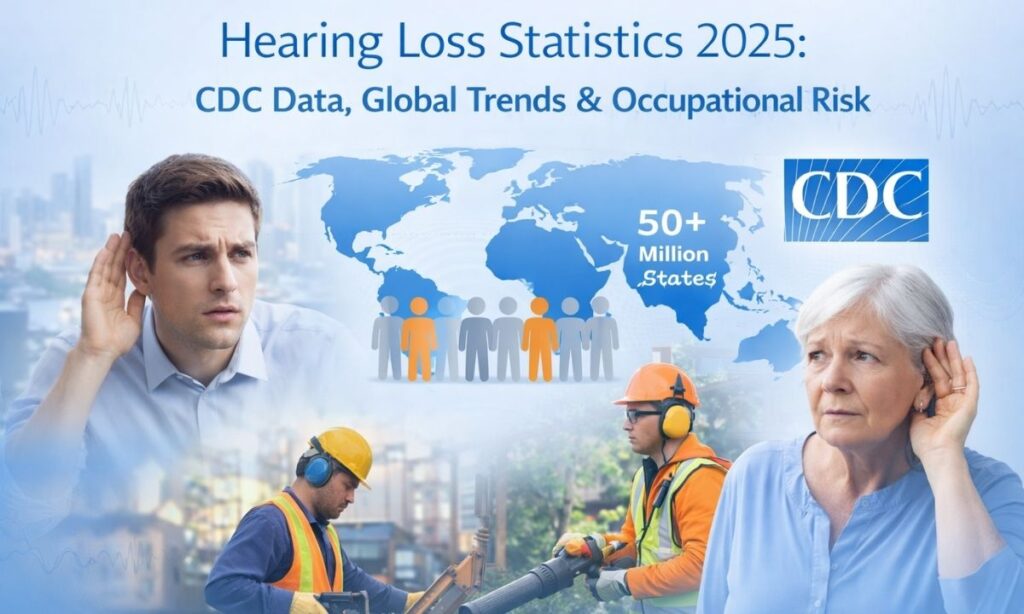
- Over 50 million Americans have some degree of hearing loss – roughly 1 in 7 people in the U.S.
- Hearing loss is the third most prevalent chronic physical condition in America, after high blood pressure and arthritis.
- As of 2024, approximately 15% of American adults – around 37.5 million individuals – report some trouble hearing.
- About 1 in 8 people in the U.S. aged 12 or older (roughly 30 million) experience hearing loss in both ears.
- People wait 7–10 years on average before seeking treatment for hearing loss, even after symptoms are clearly noticeable.
The treatment gap is one of the most alarming parts of the picture. Approximately 28.8 million adults in the U.S. could benefit from hearing aids, yet less than 16% of adults aged 20–69, and fewer than 30% of adults over 70 who need them, actually use them.
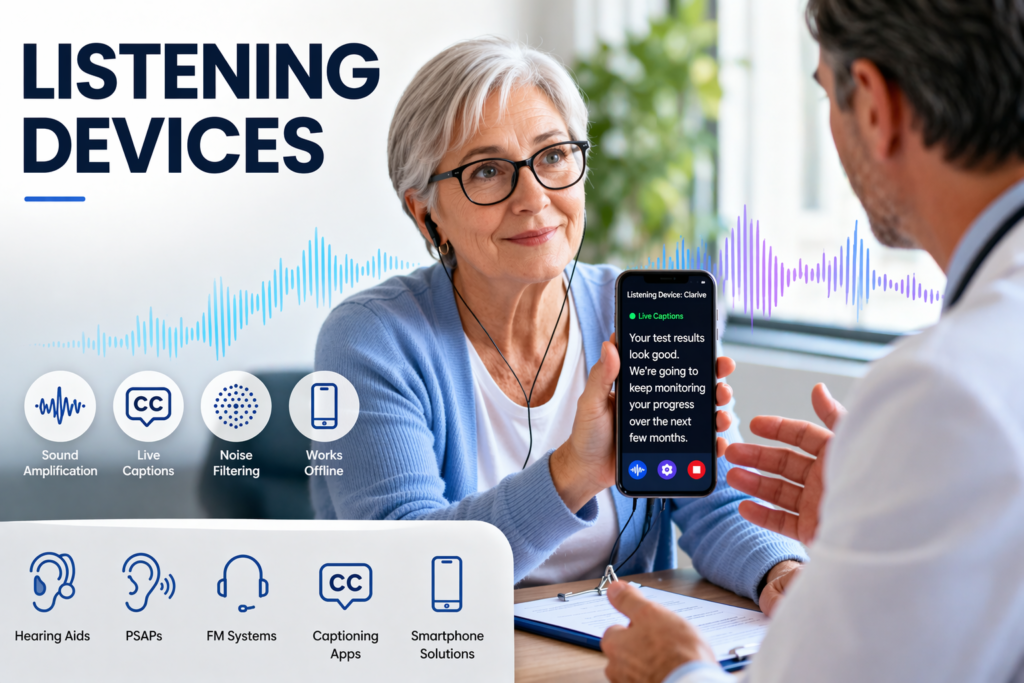
This is where tools like Listening Device: Clarive step in – offering real-time sound amplification and live captions with no account or internet required, giving people practical support while they are still in that years-long gap between noticing difficulty and seeking professional care.
Global Hearing Loss Statistics 2025: A Crisis Without Borders
Hearing loss is not just an American problem. It is one of the fastest-growing public health challenges the world has ever faced.
- 1.5 billion people worldwide have some degree of hearing loss. By 2050, that number is projected to reach nearly 2.5 billion, and over 700 million will require hearing rehabilitation.
- Over 5% of the world’s population – approximately 430 million people – currently require rehabilitation to address disabling hearing loss, including 34 million children.
- Unaddressed hearing loss carries an annual global economic cost of almost US$1 trillion.
- An estimated 80% of people with hearing loss reside in low- and middle-income countries, where access to care and hearing aids remains critically limited.
- Over 1 billion young adults are at risk of permanent, avoidable hearing loss due to unsafe listening practices.
- An annual investment of less than US$1.40 per person to scale up ear and hearing care services globally would promise a return of nearly US$16 for every dollar invested over a ten-year period.
According to a 2025 study in Frontiers in Public Health, the global prevalence of complete hearing loss had reached nearly 9.9 million cases by 2021, with age-related hearing loss remaining the most common cause, especially among adults over 60.
The burden is not shared equally. Close to 80% of people with disabling hearing loss live in countries with middle-range income or lower. Hearing care remains a privilege in much of the world.
CDC Hearing Loss Statistics: What the Data Really Shows
The Centers for Disease Control and Prevention (CDC) is the most authoritative source on hearing health in the United States. Here is what their data shows in 2025.
Children and Newborns:
- Based on 2022 CDC data, more than 98% of U.S. newborns were screened for hearing loss. More than 6,000 U.S. infants born in 2022 were identified with a permanent hearing loss – a prevalence rate of 1.7 per 1,000 babies screened.
- The prevalence rate among children and adolescents aged 12–19 is 15.2%, based on CDC NHANES audiometric data.
- The leading preventable cause of hearing loss in children and teens is ear infections, responsible for up to 46.9% of cases.
- About 12.5% (5.2 million) of adolescents aged 6–19 have permanent hearing damage from hazardous noise exposure.
Workers:
- 30 million U.S. workers are exposed to noise levels high enough to cause irreversible hearing loss, according to CDC/NIOSH data.
- 53% of noise-exposed workers report not wearing hearing protection on the job.
- In the healthcare and social assistance sector alone, approximately 11% of all workers have hearing difficulty, and 83% of noise-exposed healthcare workers report not wearing hearing protection.
Source: CDC – Data and Statistics About Hearing Loss in Children | CDC NIOSH – Noise and Hearing Loss
Noise-Induced Hearing Loss Statistics: The Damage You Cannot Undo
Noise-induced hearing loss (NIHL) is permanent. There is no surgery to reverse it. No pill to fix it. Once those tiny hair cells in the inner ear are destroyed by loud sound, they do not grow back.
- According to the NIDCD, at least 10 million adults under age 70 – and perhaps as many as 40 million adults – in the U.S. have features suggesting NIHL in one or both ears, based on CDC study data.
- Noise-induced hearing loss is the most common work-related injury in the United States.
- Sounds at or below 70 dBA, even after long exposure, are unlikely to cause hearing loss. But long or repeated exposure to sounds at or above 85 dBA can cause permanent damage – and the louder the sound, the faster the damage occurs.
- Approximately 5% of the global population has noise-induced hearing loss – a figure that continues to grow.
- An estimated 50% of people between ages 12 and 35 use headphones at volumes that put their hearing at risk.
- Common sources of harmful noise include lawnmowers, leaf blowers, woodworking tools, target shooting, concerts, and MP3 players used at high volume through earbuds.
Noise-induced hearing loss is unique among hearing conditions because it is entirely preventable. Wearing protection, reducing exposure time, and choosing quieter equipment are all proven strategies. Yet millions of workers and young people continue to skip these basic precautions every single day.
Source: NIDCD – Noise-Induced Hearing Loss
Age-Related Hearing Loss Statistics: The Invisible Shift After 60
Age-related hearing loss – called presbycusis – is the most common form of hearing loss worldwide. It happens gradually, which is exactly why so many people miss it until communication has already become a daily struggle.
- Age-related hearing loss is estimated to affect two-thirds of Americans aged 70 and older.
- 1 in 3 Americans aged 65–74 has hearing loss. Nearly half of those over age 75 have trouble hearing.
- Among Americans in their 50s, men are three times more likely than women to experience hearing loss. But those rates become more similar as people get older.
- The prevalence of disabling hearing loss in the U.S. by age group: 5% at ages 45–54, 10% at 55–64, 22% at 65–74, and 55% for those 75 and older.
- Over 95% of adults aged 90 and older are estimated to have some degree of hearing loss.
- A 2025 review published in the Annual Review of Public Health confirmed that the percentage of older adults with hearing loss increases dramatically with age, and hearing aid use lags substantially behind prevalence due to affordability and accessibility barriers.
The link to cognitive health makes age-related hearing loss especially urgent. Hearing loss is the largest treatable risk factor for dementia in adults aged 45–65, with severe hearing loss carrying five times the dementia risk compared to those with normal hearing.
And yet, hearing aids can slow cognitive decline by nearly 50% in older adults at high risk of dementia, and can reduce fall risk by up to 50%.
For older adults who are not yet ready for hearing aids or are waiting on appointments, Listening Device: Clarive offers immediate amplification and live captions that work the moment they open the app – no account, no setup.
Source: NIDCD – Age-Related Hearing Loss
Occupational Hearing Loss Statistics: The Workplace Is Louder Than You Think
Millions of Americans go to work every day in environments loud enough to permanently damage their hearing. Most do not realize the risk until it is already done.
- About 22 million workers are exposed to hazardous noise at work annually in the United States.
- 1 in 4 people with any degree of hearing damage have occupational hearing loss.
- An estimated 16% of severe hearing loss in adults is directly attributed to occupational noise exposure.
- 90% of coal miners have some degree of hearing loss.
- 14% of construction workers experience occupational hearing loss.
- More than 13 million Americans work in industries that put them at higher risk of hearing loss due to chemical exposure (ototoxic chemicals).
- 8–15% of law enforcement officers, military personnel, and first responders have hearing loss.
- NIOSH has established a recommended exposure limit (REL) of 85 dBA averaged over an eight-hour workday. For every 3 dBA increase above that level, NIOSH recommends cutting exposure duration in half.
The economic cost of occupational hearing loss is significant. Workers lose wages, productivity falls, and healthcare costs rise – all for a condition that is entirely preventable with proper protection and workplace safety programs.
Source: CDC NIOSH – Occupational Noise and Hearing Loss
Industrial Hearing Loss Statistics: High-Risk Industries by the Numbers
Some industries carry a disproportionately high burden of hearing damage. Understanding which sectors pose the greatest risk is critical for workers, employers, and safety professionals.
- Noise-induced hearing loss is the most common work-related injury in the U.S., affecting workers across virtually every major industry.
- Roughly 25% of all U.S. workers have been exposed to hazardous noise while at work at some point in their careers.
- Workers in the Agriculture, Forestry, Fishing, and Hunting (AFFH) industry have the highest tinnitus prevalence of any sector at approximately 14%.
- In the healthcare and social assistance sector, about 6% of all workers were exposed to hazardous noise in the past year, and approximately 4% to ototoxic chemicals.
- Approximately 7% of construction workers have tinnitus – the persistent ringing that accompanies noise-induced hearing damage.
- 3.6 million U.S. veterans receive disability benefits for hearing issues – the most common service-connected disability – including 2.3 million for hearing loss and 1.3 million for tinnitus.
Despite regulations and awareness campaigns, the treatment gap in industrial settings remains wide. The stigma of wearing hearing protection, peer pressure on job sites, and a general underestimation of cumulative noise risk all keep these numbers stubbornly high year after year.
Landscaper Hearing Loss Statistics: The Real Danger of Leaf Blowers
This section often gets overlooked in mainstream hearing health coverage – but for the nearly one million people employed in landscaping across the United States, it is one of the most personally relevant hearing loss statistics available.
An estimated 912,360 people in the U.S. are employed as landscapers or groundskeepers, with another 100,320 employed as first-line supervisors of landscaping and lawn service operations. For these workers, hazardous noise is not occasional. It is all-day, every day.
The Leaf Blower Problem:
- Just two hours of operating a leaf blower, which hits around 90 decibels, can cause hearing damage. Operators who use these machines strapped to their backs for a full workday face a significantly higher level of risk.
- A single gas-powered leaf blower can regularly hit 115 dB – a level that guarantees hearing loss at close range. Industrial-scale mowers used on suburban lawns range between 86 and 96 dB.
- Leaf blower noise levels typically range from 70 dB to 100 dB depending on type. Gas-powered blowers can reach 100 dB or more – comparable to standing next to a chainsaw.
- NIOSH’s recommended exposure limit is 85 dBA over an eight-hour day. For each 3 dBA increase above that, exposure time should be cut in half.
What Landscapers Experience Over Time:
Chronic noise exposure from landscaping tools leads to tinnitus and hearing loss that can range from annoying to completely debilitating. Repeated noise exposure can also lead to permanent hearing loss, which has lifelong effects including difficulty communicating, increased risk of injury on the job, and mental health issues like anxiety and depression.
Landscapers and groundskeepers are not alone – approximately 22 million workers in the U.S. are exposed to potentially damaging noise each year. Hearing loss is considered one of the most common occupational injuries in the United States, yet it is entirely preventable.
What Can Landscapers Do?
- Wear properly fitted earplugs or noise-canceling earmuffs rated for 85+ dB environments
- Switch to electric leaf blowers where possible (60–75 dBA versus 90–115 dBA for gas-powered)
- Use the NIOSH Sound Level Meter app (free from the CDC) to measure actual noise levels on job sites
- Take regular breaks away from noise sources during shifts
- Schedule annual hearing tests to track any early changes
Off the job, landscapers experiencing early hearing difficulty can use Listening Device: Clarive to amplify sound in real time and read live captions during conversations – all without needing an internet connection or medical appointment.
Source: CDC NIOSH – Grounds for Change: Reducing Noise Exposure in Grounds Management Professionals | NIDCD – Noise-Induced Hearing Loss
The Treatment Gap: Why Millions Are Still Waiting
Across every category – age, occupation, noise exposure – the numbers point to one consistent and frustrating pattern: people know something is wrong, and they still wait.
- People wait an average of nine years to get their first hearing aid after diagnosis.
- About 28.8 million U.S. adults could benefit from hearing aids, but fewer than 1 in 5 of those actually use them.
- Adults with untreated hearing loss spend an average of 46% more in total healthcare costs compared to those without hearing loss.
- Untreated hearing loss increases the likelihood of depression by 35% and is strongly linked to social isolation and communication avoidance.
The most practical step for anyone in this gap – between noticing difficulty and getting professional care – is to start with a tool that works right now. Listening Device: Clarive is designed for exactly this situation. Amplified sound, live captions, no account required. Try it free up to 5 times a day, or upgrade to Pro for unlimited access starting at $24.99/year.
Hearing loss touches every stage of life, and the more you understand it, the better equipped you are to protect yourself and the people you care about. Explore our guides below to learn about the signs, causes, types, and real cost of untreated hearing loss – everything you need in one place.
| Signs of Hearing Loss You Might Be Ignoring | Click |
| What Is Mild Hearing Loss? Levels, Signs | Click |
| Listening Devices: What They Are, How They Work | Click |
| The Complete Guide to Hearing Loss: Types, Causes, & Solutions | Click |
| Noise-Induced Hearing Loss: Causes, Symptoms, Prevention | Click |
| Why Millennials and Gen Z Are Experiencing Hearing Loss Earlier | Click |
| The Hidden Cost of Untreated Hearing Loss | Click |
| How Hearing Loss Affects Your Mental Health | Click |
Conclusion: The Numbers Are Telling You to Act Now
The 2025 hearing loss statistics paint a clear picture. This is not a rare or distant problem. It affects newborns and teenagers, construction workers and coal miners, landscapers running leaf blowers and older adults watching TV too loud. It is connected to dementia, depression, cardiovascular disease, and falls. And it costs the global economy close to $1 trillion every year.
The most important thing these numbers tell us is simple: waiting is the most expensive thing you can do.
Whether you are personally affected, caring for someone who is, or simply curious about a condition that touches 1 in 7 Americans, the first step is paying attention. Get a hearing test. Wear protection in loud environments. And if you need support today, apps like Listening Device: Clarive give you real-time amplification and live captions immediately – wherever you are.
Your hearing connects you to every conversation, every relationship, every moment that matters. Protect it while you still can.👉 Download Listening Device: Clarive – free to start, no account required.
FAQs
How many people have hearing loss in the U.S. in 2025?
Over 50 million Americans – roughly 1 in 7 people – have some degree of hearing loss in 2025. It is the third most common chronic physical condition in the country, more prevalent than diabetes or cancer.
What do global hearing loss statistics for 2025 show?
Currently 1.5 billion people worldwide live with hearing loss. By 2050, that number is projected to reach 2.5 billion. Unaddressed hearing loss costs the global economy close to $1 trillion every year.
What does the CDC say about hearing loss statistics?
CDC data shows over 98% of U.S. newborns are screened for hearing loss. More than 6,000 infants were identified with permanent hearing loss in 2022. Among teens aged 12–19, the prevalence rate is 15.2%.
What is noise-induced hearing loss and how common is it?
Noise-induced hearing loss occurs when loud sound permanently damages inner ear hair cells. Up to 40 million U.S. adults may have it. It is the most common work-related injury in the country and fully preventable.
What are the age-related hearing loss statistics in the U.S.?
One in three Americans aged 65–74 has hearing loss. Nearly half of those over 75 are affected. By age 90, over 95% of adults have some degree of hearing loss. Age is the single strongest predictor.
Which industries have the highest occupational hearing loss rates?
Coal mining (90%), agriculture and forestry (highest tinnitus rates at 14%), and construction (14%) carry the highest risks. Over 22 million U.S. workers are exposed to hazardous noise at work each year.
What are the industrial hearing loss statistics for high-risk jobs?
About 1 in 4 people with hearing damage have occupational hearing loss. An estimated 16% of severe hearing loss in adults is directly attributed to industrial noise exposure across multiple sectors.
How dangerous are leaf blowers for landscaper hearing loss?
Gas-powered leaf blowers can reach 115 dB – a level that guarantees hearing damage. Just two hours of operating a 90 dB leaf blower can cause permanent harm. Nearly 912,000 U.S. landscapers face this risk daily.
How long do people wait before treating hearing loss?
On average, people wait seven to ten years after noticing hearing difficulty before seeking treatment. Fewer than 1 in 5 of the 28.8 million adults who could benefit from hearing aids actually use them.
Can a smartphone app help with hearing loss symptoms?
Yes. Apps like Listening Device: Clarive provide real-time sound amplification, background noise filtering, and live captions. They offer immediate, no-setup support for mild to moderate hearing difficulty without a medical appointment needed.